Overview
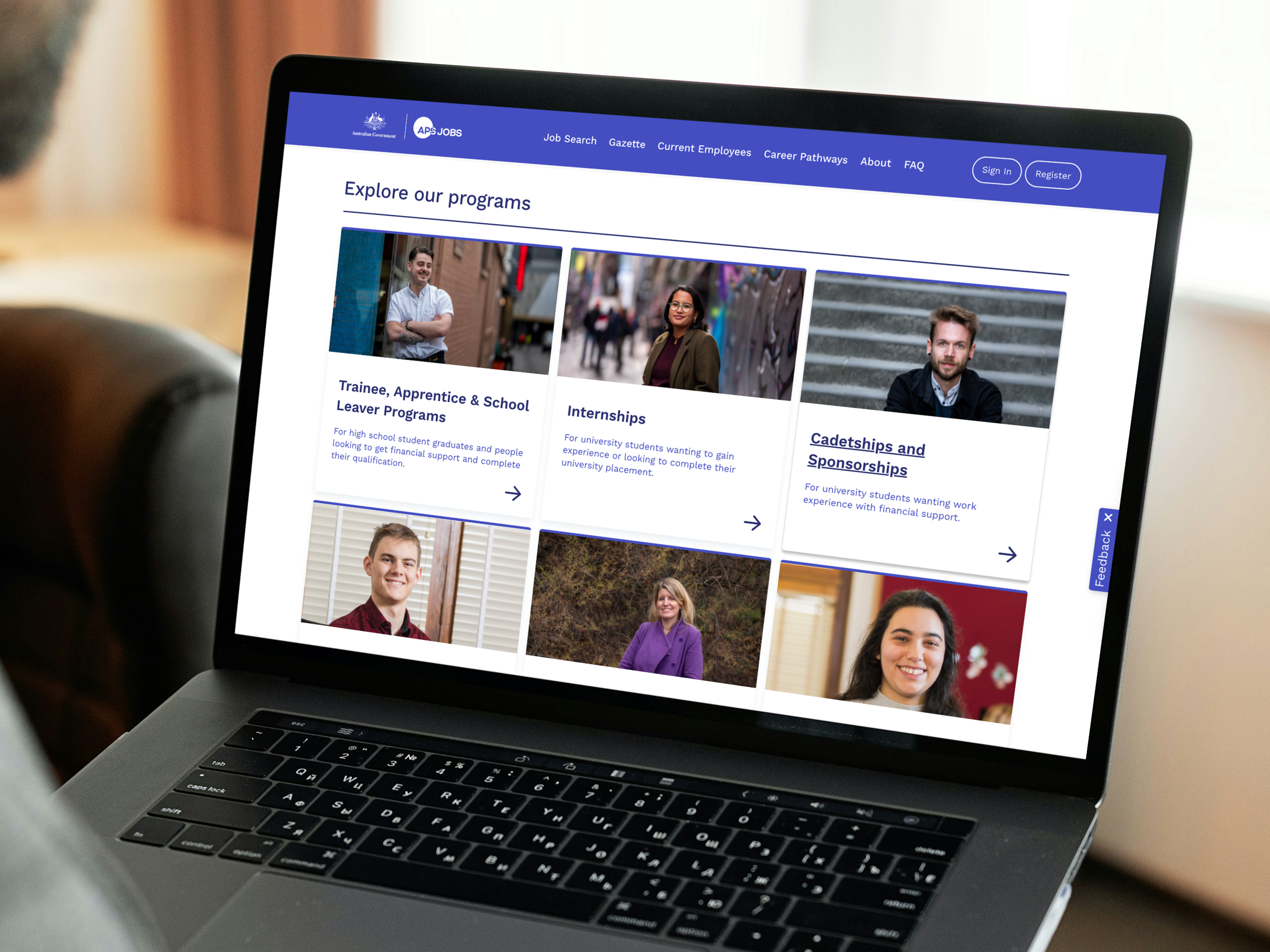
As a UX Designer at Deloitte Digital, I worked within a small multidisciplinary team on the Career Pathways section of the APS Jobs platform, helping users explore structured entry points into careers within the Australian Public Service. Operating in weekly sprint cycles, the work enabled rapid iteration, continuous feedback, and close collaboration with stakeholders and developers. My focus covered UX design, accessibility improvements, and early design system thinking to support consistency and future scalability.
Problem Statement
The Career Pathways section is a key entry point for users exploring public service careers, but several usability and consistency issues were limiting its effectiveness.
Key challenges included:
- Inconsistent layouts and components across Career Pathways flows creating a fragmented experience
- Accessibility considerations not consistently applied, reducing inclusivity for users with different needs
- Content structure and presentation making it harder for users to understand progression and available options
- No defined design system for the section, resulting in repeated patterns implemented inconsistently
Deliverables
- Focused accessibility audit of the Career Pathways section identifying key usability and WCAG issues
- Single week design sprint to explore and prototype improvements to key user flows
- Refined information structure and hierarchy to improve clarity of career progression paths
- Early design system direction with reusable components and patterns for the section
- Component recommendations and documentation to support consistency and future development
- Collaboration with developers and stakeholders to ensure feasibility and alignment
Outcome
The work delivered a clearer, more accessible Career Pathways experience within APS Jobs. A more structured information hierarchy made it easier for users to understand and compare career progression options. Accessibility considerations were better embedded into key interactions, supporting a more inclusive experience. Early design system thinking improved consistency across the section and reduced ambiguity for future development teams.