Overview
When I joined the organisation, the design practice had no shared foundation. There was no design system, no token architecture, and no reusable components in sight. Every screen was being designed in isolation, leading to visual inconsistencies across products and a disconnect between what was designed and what was built. No one had identified it as a problem worth solving yet.
The Problem
Working as the sole designer within a legacy-minded organisation, I quickly recognised that the team had no single source of truth to design or build from. The effects were visible everywhere: duplicated effort across files, inconsistent UI patterns, and a slow, inefficient design process that made scaling any product difficult. Without a shared system, every new project started from zero.
The Approach
Without a formal brief or stakeholder request, I initiated and led the build from scratch. I drew on the Atomic Design methodology, a framework I had refined during my time at Deloitte, and adapted it to fit a government context. This meant starting at the most granular level and working upward systematically, from design tokens through to fully composed components. Given the Commonwealth context, accessibility compliance with WCAG 2.1 AA was a non-negotiable foundation throughout.
The process involved:
- Establishing a token architecture first, defining colour, typography, spacing, and elevation as reusable variables that could underpin every component and screen
- Auditing the existing design landscape to understand what patterns were being used inconsistently and where the biggest gains could be made
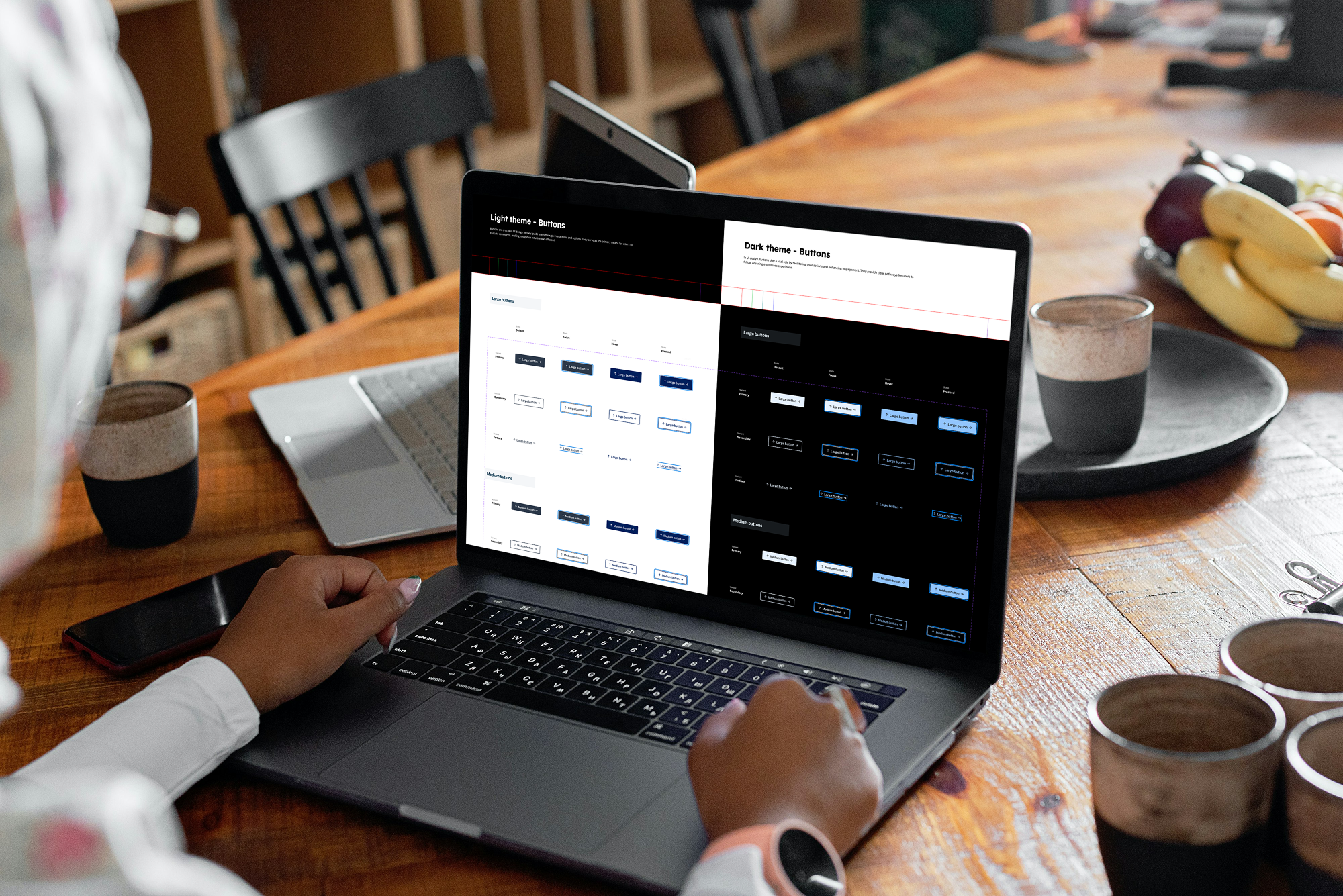
- Building a library of over 60 components, each designed to be modular, accessible, and production-ready
- Documenting design rules and usage guidelines so the system could be understood and applied consistently across projects
The Challenge
The biggest obstacle was cultural. This was a team with a deeply ingrained legacy mindset where reusable components and systematic thinking simply were not part of the workflow. Introducing a design system meant not just building it, but shifting how the team thought about design entirely.
The Outcome
The design system became the shared foundation the organisation had never had. It streamlined the design workflow, eliminated the inconsistencies that had plagued previous projects, and made it possible to produce cleaner, more consistent designs significantly faster than before. The system is now the active foundation for all design work within the team and continues to evolve as new projects are onboarded and new patterns are introduced.